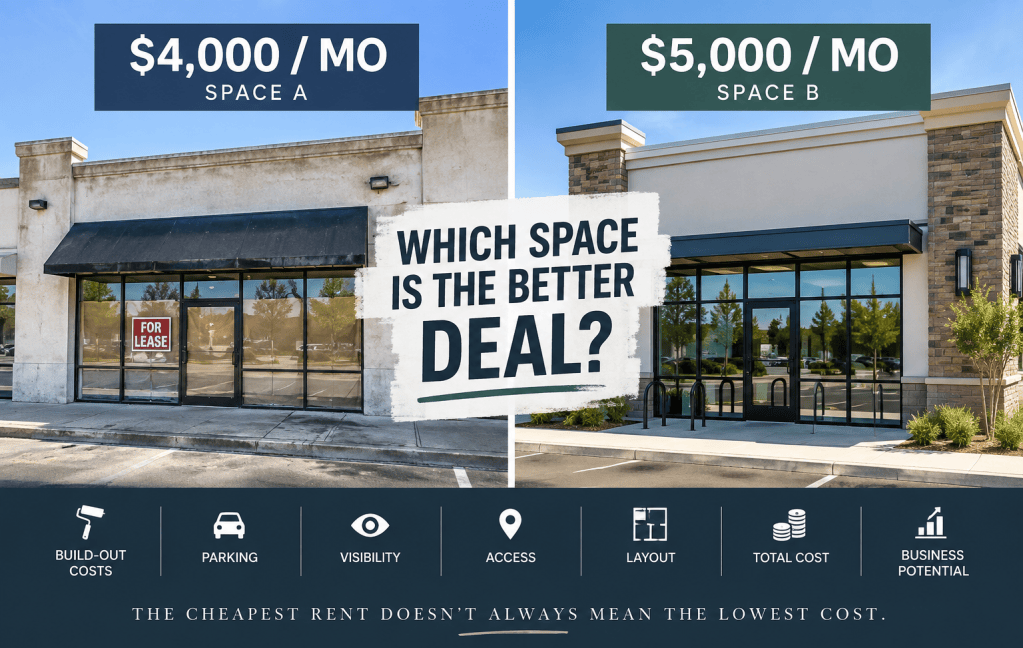
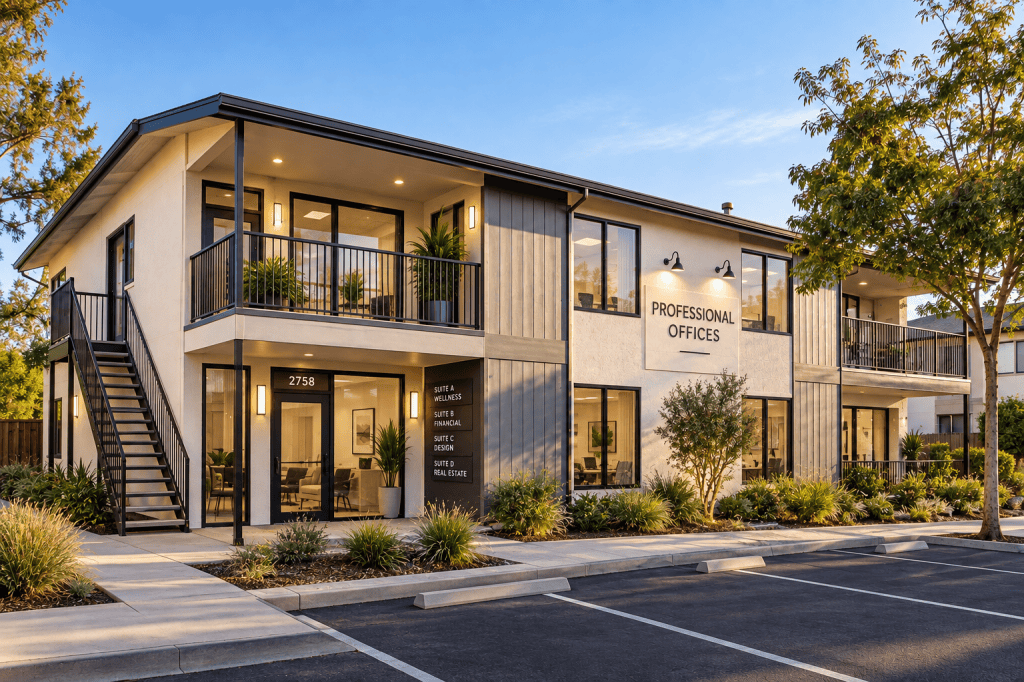
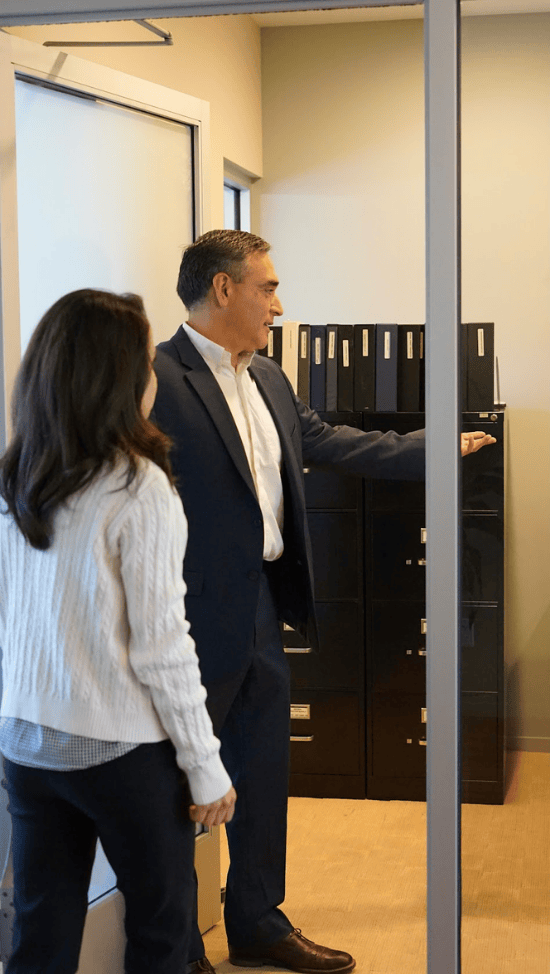
By Rod Trujillo, Commercial Real Estate Broker

For many business owners, there comes a point when a question starts to surface:
Should I keep leasing my commercial space—or should I buy a property of my own?
It sounds like a real estate question.
In reality, it is just as much a business, financial, and long-term planning question.
I’ve worked with business owners who were absolutely ready to purchase commercial property.
I’ve also worked with successful businesses where buying would have tied up capital, limited flexibility, or forced the company into a property that didn’t support where the business was headed.
There is no universal answer.
Owning your building can be a powerful long-term strategy. Leasing can also be exactly the right decision.
The key is understanding what you’re trying to accomplish before deciding which path makes sense.
This guide walks through the factors I encourage business owners to consider when deciding whether to lease or buy commercial real estate in San Luis Obispo County.
In This Guide
- In This Guide
- Start With the Business—Not the Building
- Why Business Owners Consider Buying Commercial Property
- The Case for Leasing Commercial Space
- Leasing Provides Flexibility
- Leasing May Give You Access to a Better Location
- The Case for Buying Commercial Property
- Ownership Gives You More Control
- Your Real Estate Can Become a Separate Asset
- The Question Nobody Likes to Ask: What Else Could You Do With the Money?
- Don’t Compare Rent to a Mortgage Payment
- How Long Will You Stay?
- What Is Owner-User Commercial Real Estate?
- What About SBA Financing?
- The Property Has to Work as Real Estate Too
- When Leasing May Make More Sense
- When Buying May Make More Sense
- A Simple Lease-or-Buy Exercise
- Five Questions I Would Ask Before Buying
- Common Lease-vs.-Buy Mistakes
- Frequently Asked Questions
- Is buying commercial property better than leasing?
- How long should I plan to stay before buying?
- Can my business buy a building and rent part of it to another company?
- Can I use an SBA loan to buy commercial property?
- Is paying rent “throwing money away”?
- Should I talk to a broker before talking to a lender?
- Final Thoughts
- Thinking About Leasing or Buying Commercial Property?
- Continue Exploring the Resource Center
Start With the Business—Not the Building
One of the easiest mistakes to make is finding a property you love and then trying to make the business case fit the building.
I prefer to work in the opposite direction.
Start with the business.
Ask:
Where do we expect this company to be in five years?
How many employees might we have?
How much space will we need?
Could our operations change?
How important is this particular location?
How much capital does the business need for growth?
Are we prepared to own and maintain commercial real estate?
Those questions matter because buying commercial property generally creates a much longer-term commitment than signing a lease.
The property should support the business. The business shouldn’t have to adapt itself around the property simply because you own it.
Why Business Owners Consider Buying Commercial Property
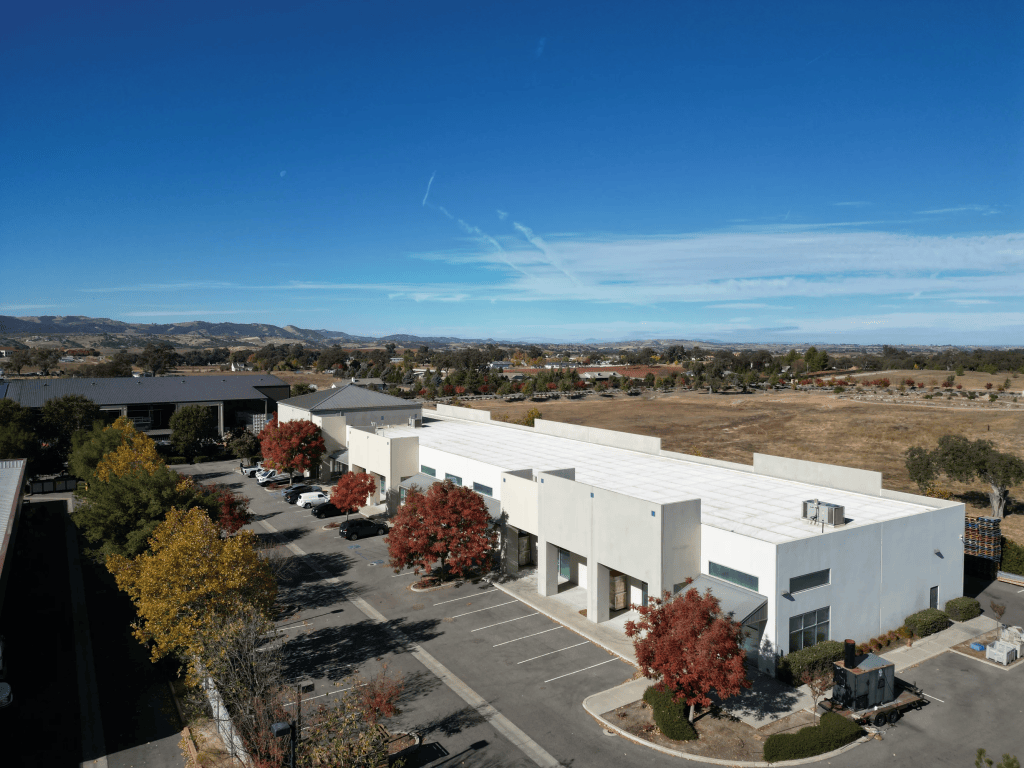
There are several reasons a business owner may want to purchase rather than continue leasing.
One of the biggest is control.
When you own the property, you are no longer negotiating lease renewals with a landlord.
You may have greater control over improvements, subject to zoning, permitting, financing, association requirements, and other restrictions.
You may also have the opportunity to build equity over time.
For some business owners, owning commercial real estate becomes part of a broader wealth-building or retirement strategy.
But ownership comes with responsibilities and risks that tenants don’t necessarily have.
That’s why the decision needs to go deeper than:
“Why should I keep paying rent when I could own?”
That question makes intuitive sense.
But financially, the comparison is more complicated.
The Case for Leasing Commercial Space
Leasing often gets treated as the option you use until you can afford to buy.
I don’t look at it that way.
Leasing is a business strategy.
And in many situations, it can be the smarter one.
Leasing Can Preserve Capital
Buying commercial real estate typically requires significant cash.
Depending on the financing and transaction, a buyer may need funds for:
- Down payment
- Closing costs
- Due diligence
- Inspections
- Appraisal
- Environmental investigation
- Improvements
- Furniture and equipment
- Moving expenses
- Reserves
- Unexpected repairs
Every dollar committed to the property is a dollar that isn’t available somewhere else in the business.
For a growing company, that distinction can be significant.
Would $200,000 create more value as equity in a building—or invested in employees, equipment, inventory, technology, marketing, or expansion?
There isn’t one correct answer.
But it’s a question worth asking.
Leasing Provides Flexibility
Businesses change.
A company with ten employees today may have twenty-five several years from now.
A retailer may add another location.
A professional practice may become more remote.
A company may need warehouse space that it doesn’t need today.
Leasing can give businesses more flexibility to adjust their real estate as their needs change.
Ownership can make those changes more complicated.
If you outgrow a leased property, you can eventually relocate when the lease permits.
If you outgrow a building you own, you may need to sell it, lease it to another tenant, expand it if possible, or purchase another property.
That doesn’t mean ownership is bad.
It means you need to think several moves ahead.
Leasing May Give You Access to a Better Location
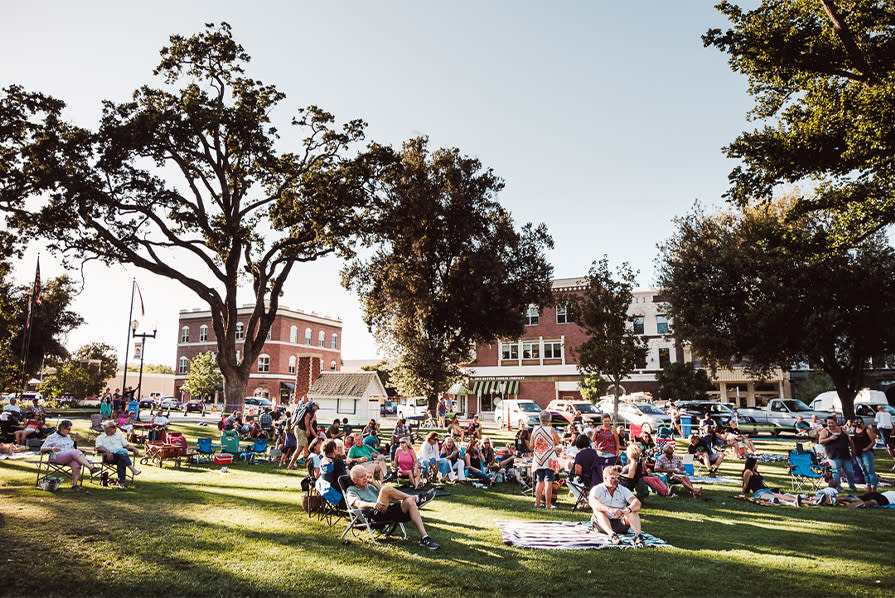
This is particularly important in San Luis Obispo County.
The property you would ideally like to own may simply not be available for purchase.
Commercial inventory can be limited, especially in desirable locations.
You may find the perfect retail location available for lease but nothing comparable available for sale.
Or you may be able to lease a property in a stronger location than you could afford to purchase.
For many businesses, location creates more value than ownership.
A retailer, restaurant, medical practice, or service business shouldn’t sacrifice a strategically important location simply for the sake of saying it owns its building.
The Case for Buying Commercial Property
Now let’s look at the other side.
For the right business, buying commercial real estate can be an excellent long-term decision.
You Can Build Equity
When you make lease payments, you’re purchasing the right to occupy a property for a period of time.
When you own and make mortgage payments, part of those payments may reduce the loan principal and increase your equity.
Over a long enough period, that can become a meaningful asset.
The property may also appreciate.
But it’s important not to assume appreciation is guaranteed.
Commercial real estate values can rise or fall depending on market conditions, interest rates, property performance, location, condition, zoning, tenant demand, and many other factors.
Buy because the property makes sense—not because you assume the value can only go up.
Ownership Gives You More Control
A tenant generally needs to operate within the rights provided by its lease.
An owner has a different level of control over the property, although ownership still comes with restrictions.
Depending on the property, an owner may have more ability to:
- Make long-term improvements
- Customize the building
- Install specialized equipment
- Control signage
- Plan renovations
- Manage parking
- Make decisions about the property over a longer horizon
For businesses with highly specialized facilities, that control can be particularly valuable.
Your Real Estate Can Become a Separate Asset
Some business owners eventually structure their real estate separately from the operating company.
For example, a real estate entity may own the property while the operating business leases the space.
There can be legal, tax, financing, liability, and estate-planning considerations involved in structures like these, so qualified attorneys, accountants, tax professionals, and financial advisors should be involved.
But conceptually, this can allow the owner to think about two assets:
The operating business
and
The commercial real estate
Over time, those assets may serve different purposes.
A business owner might eventually sell the operating company while retaining the real estate and leasing it to the new owner.
Again, the specifics require professional legal and tax guidance.
But it illustrates why some entrepreneurs view commercial property ownership as part of a longer-term strategy.
The Question Nobody Likes to Ask: What Else Could You Do With the Money?
This is one of the most important parts of the lease-versus-buy decision.
Suppose buying a property requires you to put a substantial amount of cash into the transaction.
What would happen to that money if you didn’t buy?
Could it:
Hire another salesperson?
Purchase equipment?
Open another location?
Increase inventory?
Reduce expensive debt?
Fund marketing?
Build cash reserves?
Acquire another company?
Sometimes buying the building is the best use of capital.
Sometimes it isn’t.
Owning real estate and growing a business are both investments competing for the same dollars.
The correct decision depends on which opportunity is likely to create more value for you.
Don’t Compare Rent to a Mortgage Payment
This is another mistake I see.
A business owner says:
“I’m paying $6,000 a month in rent. If the mortgage is $6,000, I should obviously buy.”
That isn’t an apples-to-apples comparison.
The cost of owning commercial property can include:
- Mortgage payments
- Property taxes
- Property insurance
- Repairs
- Maintenance
- Roof
- HVAC
- Parking lot
- Landscaping
- Utilities
- Property management
- Capital improvements
- Association dues, if applicable
- Reserves for future expenses
A tenant may already pay some of those expenses under a Triple Net lease.
But ownership can still shift additional risk and responsibility to the property owner.
The better comparison is:
Total cost of leasing
versus
Total cost of ownership
And then you have to consider the equity, flexibility, opportunity cost, tax considerations, and business strategy associated with each.
How Long Will You Stay?
Time horizon matters.
Buying and selling commercial real estate involves transaction costs.
If you expect to occupy a property for only a few years, purchasing may be difficult to justify depending on the circumstances.
If you believe the property can serve the business for ten, fifteen, or twenty years, ownership becomes a different conversation.
Ask yourself:
Can this property still work if my business grows?
Could you expand?
Could you reconfigure it?
Could you lease out excess space?
Would another business want the property if you eventually leave?
A good owner-user property should ideally make sense not only for your business today but also as a piece of real estate.
What Is Owner-User Commercial Real Estate?
An owner-user is a business owner who purchases commercial property and occupies some or all of it with their own business.
Examples might include:
A contractor purchasing an industrial building.
A dentist purchasing a medical office.
A manufacturer purchasing a warehouse.
A retailer purchasing its storefront.
A professional firm purchasing an office building.
A business may also purchase a property larger than it currently needs and lease a portion to other tenants, subject to financing, zoning, lease, and other requirements.
That can create an interesting combination of business occupancy and investment real estate.
What About SBA Financing?
Some owner-user commercial real estate purchases may qualify for financing through programs associated with the U.S. Small Business Administration.
SBA-related financing can sometimes allow eligible businesses to purchase owner-occupied commercial real estate with structures that differ from conventional investment-property financing.
However, eligibility, occupancy requirements, down payments, loan structures, fees, rates, and other requirements vary by program, lender, borrower, and transaction.
If you’re considering this route, speak with an experienced SBA lender early in the process.
Don’t wait until you’ve found the perfect building to learn whether the financing works.
Understanding your purchasing power before touring properties can save a tremendous amount of time.
The Property Has to Work as Real Estate Too
Here’s something I think business owners occasionally overlook.
They’re so focused on how well a building works for their company that they forget to ask whether it’s a good piece of real estate.
Imagine your business leaves the property someday.
Could you lease the building to somebody else?
Would another buyer want it?
Does the location have broad appeal?
Is the layout highly specialized?
Is there enough parking?
Is access good?
Does the zoning allow a reasonable range of uses?
A property that works only for one highly specific operation can carry different risk than a flexible building that could appeal to many future users.
When you buy commercial property, you’re making two decisions:
Is this good for my business?
and
Is this good real estate?
You want to be comfortable with both answers.
When Leasing May Make More Sense
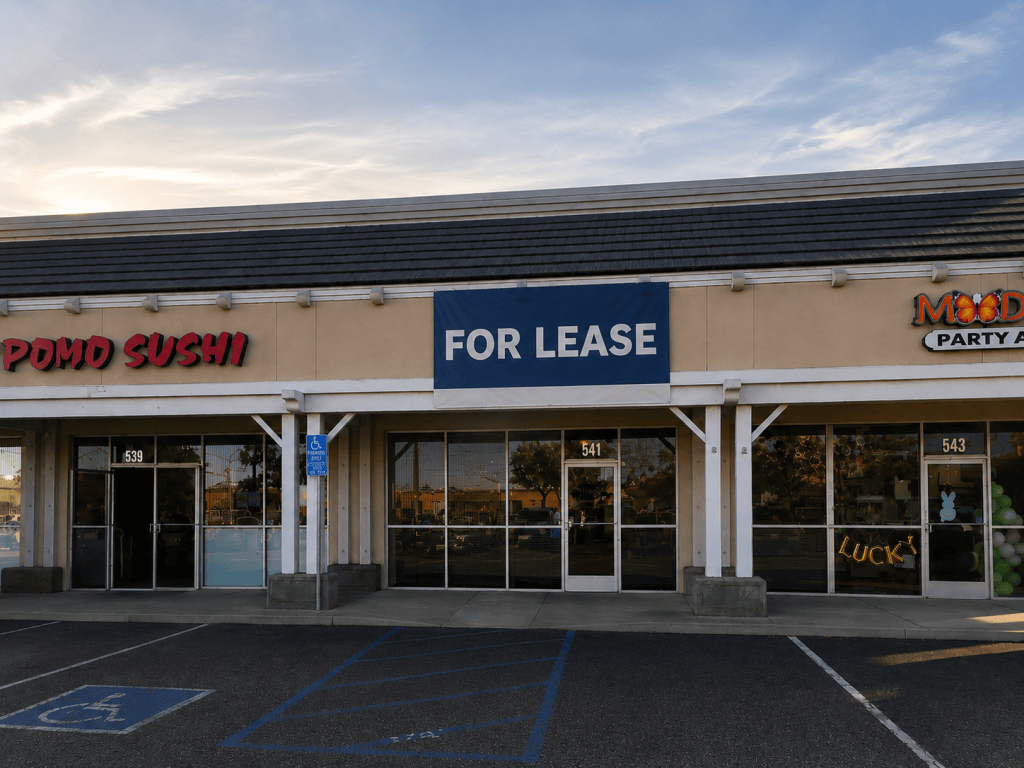
Leasing may deserve serious consideration when:
- Your business is growing rapidly
- Your future space needs are uncertain
- You need to preserve capital
- The best location isn’t available for purchase
- You don’t want property-management responsibilities
- You expect to relocate within a relatively short period
- Your capital could generate greater returns inside the business
- Purchasing would stretch the company’s finances too far
There is nothing wrong with leasing.
A profitable company operating from a strategically located leased property can be in a far stronger position than a cash-strapped company that owns the wrong building.
When Buying May Make More Sense
Buying may deserve serious consideration when:
- Your business is financially stable
- You expect to remain in the location long term
- Your space requirements are relatively predictable
- You have sufficient capital and reserves
- The property fits your operations
- You want greater control over the real estate
- The economics make sense
- You want to build a commercial real estate asset
- The property has value beyond your specific business use
Again, none of these automatically means you should buy.
They simply make ownership worth evaluating.
A Simple Lease-or-Buy Exercise
Before making the decision, sit down with your broker, lender, accountant, attorney, and other appropriate advisors and run both scenarios.
Scenario A — Lease
Estimate:
Base rent
NNN/CAM or operating expenses
Utilities
Insurance
Tenant improvements
Rent increases
Moving costs
Expected occupancy period
Scenario B — Buy
Estimate:
Purchase price
Down payment
Loan payments
Closing costs
Property taxes
Insurance
Maintenance
Repairs
Capital reserves
Improvements
Potential equity accumulation
Expected holding period
Then ask a third question:
What happens to the business under each scenario?
That’s the part a spreadsheet can’t answer by itself.
Five Questions I Would Ask Before Buying
If a business owner told me they were thinking about purchasing their building, I would start here.
1. Where will your business be in five to ten years?
If you don’t know, that’s important information.
2. How much cash will the purchase remove from the business?
And what else could that capital accomplish?
3. Does this property still work if you grow?
Don’t buy yourself into another relocation.
4. Would someone else want this property?
Think about resale and leasing potential from the beginning.
5. Are you buying because the numbers work—or because you’re tired of paying rent?
Those aren’t the same reason.
“I’m tired of paying rent” is an emotion. It isn’t an investment analysis.
Common Lease-vs.-Buy Mistakes
Buying Too Soon
A young or rapidly changing business may benefit more from flexibility than ownership.
Waiting Too Long
On the other hand, a mature business that has occupied similar space for many years may miss opportunities by never evaluating ownership.
Using Every Available Dollar for the Down Payment
Owning the building doesn’t eliminate the need for business reserves.
Underestimating Repairs
Roofs, HVAC systems, parking lots, plumbing, and other building components eventually require money.
Ignoring Future Growth
Buying a building your company will outgrow quickly can create another real estate problem.
Choosing Ownership Over Location
Don’t put a customer-dependent business in the wrong place simply because the building is available for sale.
Assuming Real Estate Always Appreciates
It doesn’t.
Evaluate the property based on the deal in front of you—not an assumption about the future.
Frequently Asked Questions
Is buying commercial property better than leasing?
Not necessarily. Buying can provide control and the opportunity to build equity, while leasing can preserve capital and provide flexibility. The right choice depends on the business, property, financing, location, and long-term goals.
How long should I plan to stay before buying?
There is no universal minimum. Because buying and selling involve transaction costs and market risk, the expected holding period should be part of the financial analysis.
Can my business buy a building and rent part of it to another company?
Potentially. This can be an attractive owner-user strategy, but financing requirements, zoning, existing leases, legal structure, and other considerations need to be evaluated.
Can I use an SBA loan to buy commercial property?
Some qualifying owner-user transactions may be eligible for SBA-related financing. Speak with an SBA lender about current program requirements and your specific circumstances.
Is paying rent “throwing money away”?
No. Rent purchases something valuable: the right to use a property without owning it.
Leasing can also preserve capital, transfer certain property risks to the landlord, and provide flexibility.
The question isn’t whether rent builds equity.
The question is whether leasing or owning creates the better outcome for your business.
Should I talk to a broker before talking to a lender?
I recommend involving both early.
A commercial real estate broker can help you understand the property market and available opportunities.
A lender can help establish what you can realistically finance.
Knowing both before you start seriously pursuing properties puts you in a much stronger position.
Final Thoughts
The lease-versus-buy decision isn’t about proving that one strategy is better than the other.
It’s about matching your real estate strategy to your business strategy.
For some business owners, buying commercial property can create control, stability, equity, and a valuable long-term asset.
For others, leasing provides the flexibility and capital efficiency needed to grow the company faster.
Neither is automatically right.
Neither is automatically wrong.
The question I would ask is:
Which option puts your business in the strongest position five or ten years from now?
That’s the decision that matters.
Thinking About Leasing or Buying Commercial Property?
If you’re evaluating commercial space in San Luis Obispo County, I can help you compare available properties, understand lease structures, evaluate owner-user opportunities, and think through the real estate side of the decision.
Whether the answer ultimately turns out to be lease or buy, the goal is the same:
Find the real estate strategy that supports where your business is going.
Contact Rod Trujillo to discuss your commercial real estate goals.
Continue Exploring the Resource Center
Understanding Triple Net (NNN) Leases: What Every Business Owner Should Know
How to Lease Commercial Space in San Luis Obispo County: A Step-by-Step Guide
The Complete Guide to Commercial Real Estate in San Luis Obispo County
San Luis Obispo County Commercial Real Estate Market Update
Coming Soon:
Tenant Representation vs. Landlord Representation
How to Choose the Right Location for Your Business
Commercial Real Estate Due Diligence: What Buyers Should Know