By Rod Trujillo | Trujillo Commercial Real Estate Group
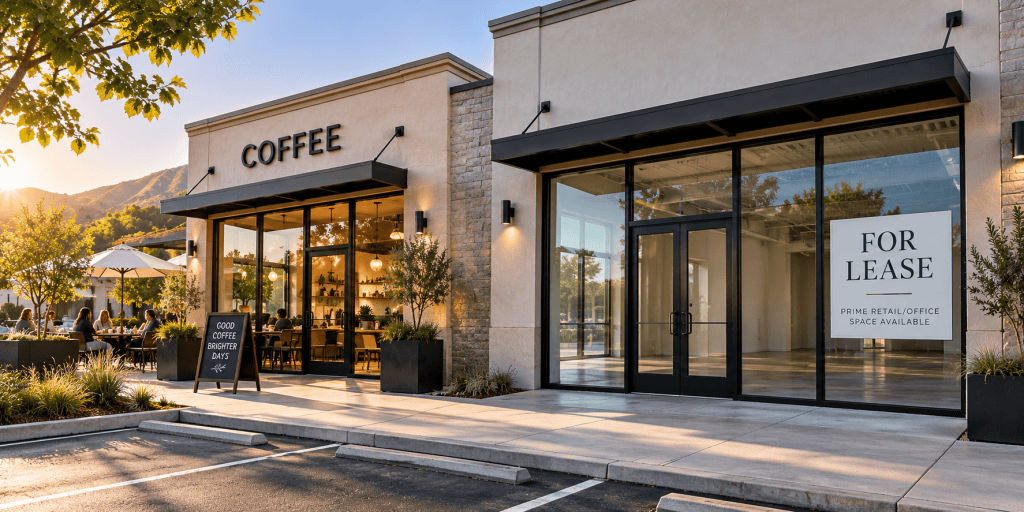
Drive through almost any commercial district in San Luis Obispo County, and you’ll notice something interesting.
Two commercial properties can be located just a few blocks apart.
Similar square footage.
Similar asking rents.
Similar types of businesses nearby.
Yet one property leases relatively quickly, while the other sits vacant for months.
Why?
It’s easy to assume the answer is price.
And sometimes, it is.
But after years of working in commercial real estate, I’ve learned that vacancy is rarely explained by one factor alone.
A commercial property can be attractive, well-maintained, and located in a desirable area and still struggle to attract the right tenant.
The difference often comes down to how well the property aligns with what businesses actually need.
Let’s look at seven factors that can influence how quickly a commercial space leases.
1. The Asking Rent Doesn’t Match the Market
Let’s start with the most obvious factor.
Price.
Every property owner wants to maximize rental income. That’s understandable.
But there’s a difference between achieving the highest possible rent and achieving the best financial outcome.
Imagine two comparable commercial spaces.
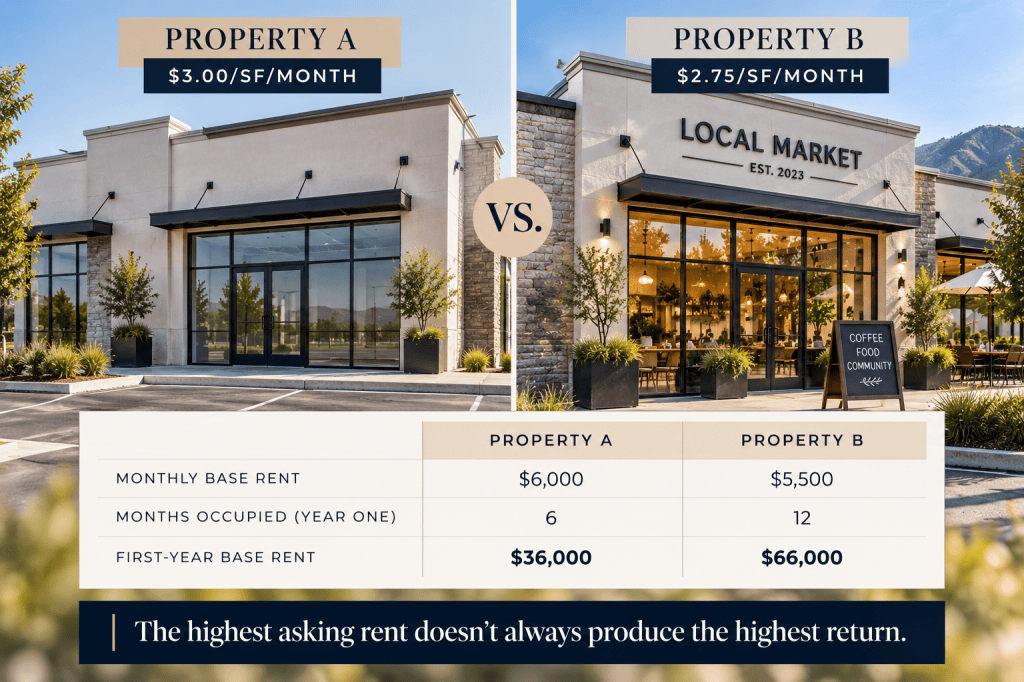
Property A is asking $3.00 per square foot per month.
Property B is asking $2.75 per square foot per month.
Both spaces are 2,000 square feet.
Property A’s monthly base rent is $6,000.
Property B’s monthly base rent is $5,500.
At first glance, Property A appears to be the better investment for its owner.
But what if Property A sits vacant for six months while Property B leases immediately?
Let’s Run the Numbers
Assume both properties are offered under otherwise comparable terms and exclude operating expenses, concessions, and leasing costs for simplicity.
| Property A | Property B | |
|---|---|---|
| Monthly Base Rent | $6,000 | $5,500 |
| Months Occupied in Year One | 6 | 12 |
| First-Year Base Rent | $36,000 | $66,000 |
Despite asking $500 more per month, Property A collects $30,000 less in first-year base rent.
That’s a substantial difference.
Of course, a longer holding period, future rent increases, lease terms, and tenant creditworthiness can change the overall analysis.
But the lesson remains:
The highest asking rent doesn’t always produce the highest return.
Owners should evaluate asking rent alongside market demand, vacancy risk, and the total economics of the lease.
2. The Space Doesn’t Match What Businesses Need
A commercial property isn’t just a collection of walls and square footage.
It’s a place where a business needs to operate efficiently.
And different businesses have very different requirements.
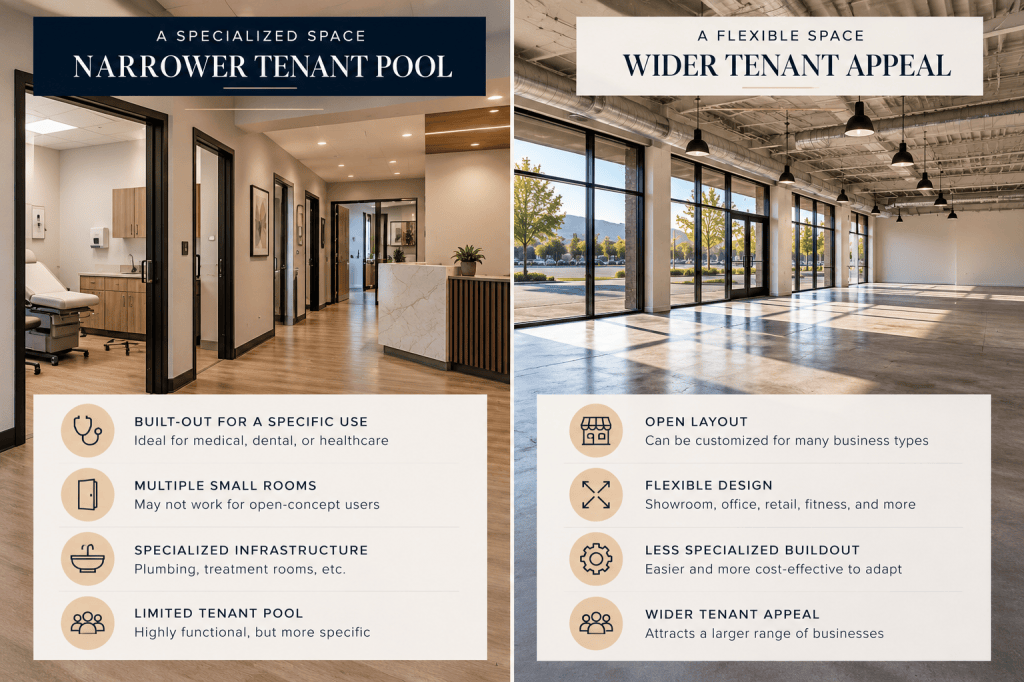
A medical office might need treatment rooms, plumbing, accessible facilities, and convenient patient parking.
A restaurant might need kitchen infrastructure, ventilation, grease handling, and sufficient utility capacity.
A professional services company may prioritize private offices, meeting rooms, and reliable internet.
A retailer may care most about visibility, storefront exposure, customer access, and nearby businesses.
The more specialized a space is, the smaller its potential tenant pool may become.
Think About the Layout
Imagine a 3,000-square-foot commercial suite.
It has a reception area, 12 small private offices, narrow corridors, and limited open space.
That layout might be ideal for one type of business.
But another tenant might need an open showroom or collaborative workspace.
Even if both businesses need approximately 3,000 square feet, the existing layout may make the property more attractive to one than the other.
What Can Owners Do?
Before spending money on renovations, evaluate which types of tenants are most likely to use the space.
Consider whether certain improvements could make it more flexible.
Sometimes relatively simple changes can broaden the potential tenant pool.
Other times, significant renovations may not be financially justified.
The goal isn’t to make the property work for every business. It’s to make it attractive to the right businesses.
3. The Property Makes a Poor First Impression
Think about the last time you visited a commercial property.
Before you walked through the front door, you probably noticed several things.
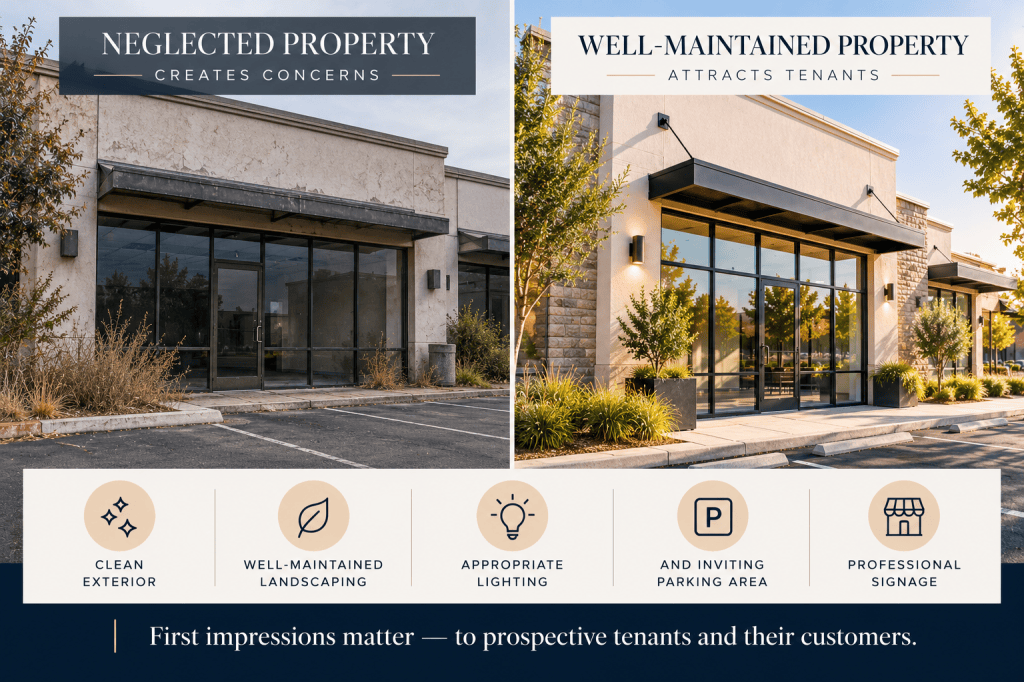
The parking lot.
The landscaping.
The building exterior.
The signage.
The cleanliness.
The condition of the surrounding property.
Prospective tenants notice those things too.
And their customers will notice them once the business opens.
A property that looks neglected can create concerns about future maintenance, management responsiveness, and the overall customer experience.
Small Details Can Make a Difference
Faded paint.
Overgrown landscaping.
Poor lighting.
Damaged signage.
Trash around the property.
A parking lot with visible maintenance issues.
Individually, these may seem minor.
Together, they can influence how a prospective tenant perceives the property.
First Impressions Matter Online, Too
Many prospective tenants first encounter a property through listing photos.
Dark photographs, cluttered interiors, outdated images, and poor-quality marketing materials can make an otherwise appealing space look less attractive.
That’s why I believe property presentation should be part of the leasing strategy.
You don’t always need a major renovation to improve a property’s marketability. Sometimes you need to present what you already have more effectively.
4. Parking, Visibility, and Access Are Working Against You
This is one of my favorite things to evaluate when looking at commercial properties.
Because some of the most important features of a property are outside the building.
Imagine opening a business in a beautiful commercial suite.
The interior looks incredible.
The rent works.
The layout is perfect.
But customers struggle to find parking.
Or the entrance is difficult to locate.
Or the business has almost no visibility from the street.
Those issues can affect how well the location works for certain businesses.
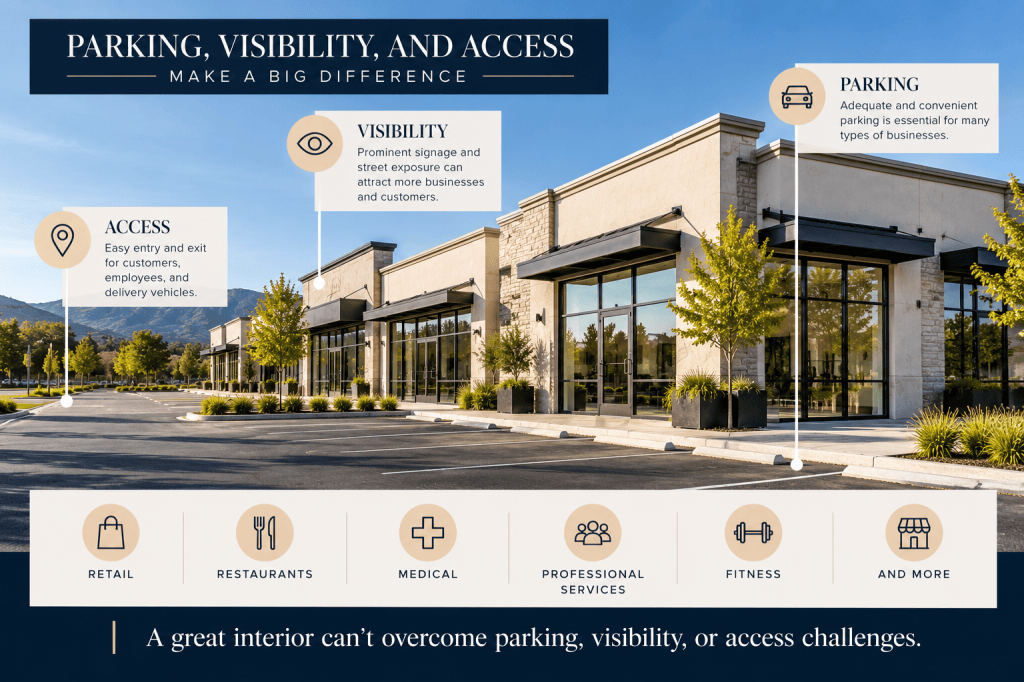
Parking
The importance of parking depends on the business.
A medical office with frequent patient appointments may have different parking needs than an office with a small staff and limited visitors.
A restaurant may experience concentrated demand during lunch and dinner hours.
A fitness studio may have classes that bring many customers at once.
It’s important to evaluate both the number of available spaces and how those spaces are used throughout the day.
Visibility
Some businesses depend heavily on being seen.
Retailers, restaurants, and certain service businesses may benefit from prominent storefronts and signage.
Other businesses may be comfortable in less visible locations.
Access
Can customers easily enter and exit the property?
Is the entrance intuitive?
Can delivery vehicles reach the space?
Is the property accessible to the people who need to use it?
These factors can affect a business’s willingness to lease.
A beautiful interior can’t always overcome a location that doesn’t function well for the intended business.
5. The Lease Terms Are Too Restrictive
Sometimes a property generates interest.
Prospective tenants tour the space.
They like the location.
The rent seems reasonable.
Then negotiations begin.
And the deal falls apart.
Why?
The lease terms may not work for the tenant’s business.
Common Areas of Negotiation
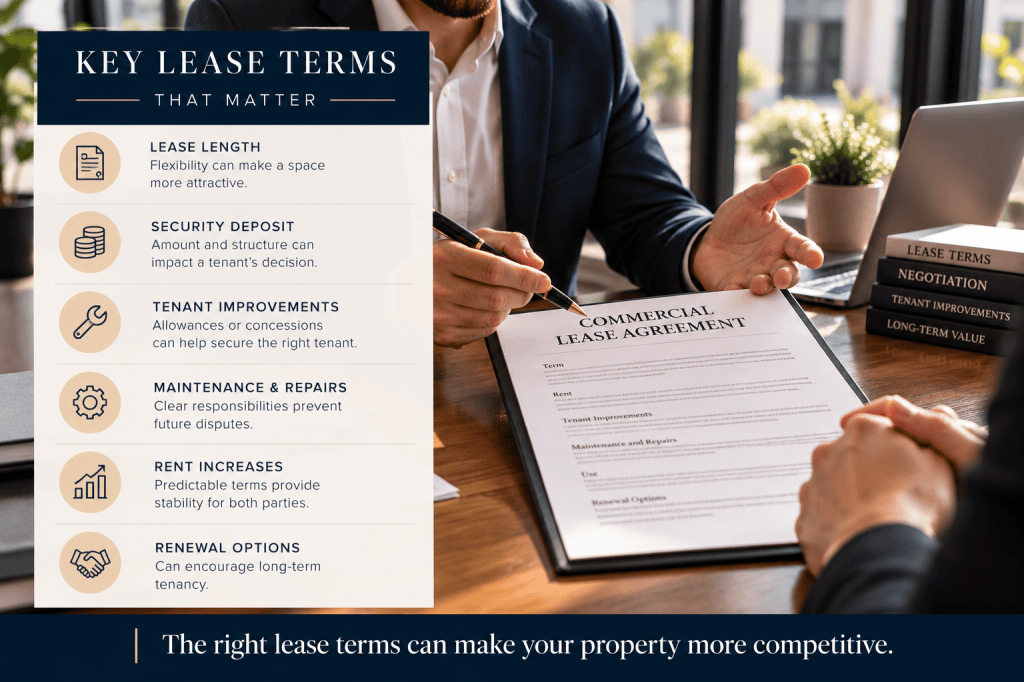
Prospective tenants may have concerns about:
- Lease length
- Security deposits
- Personal guarantees
- Tenant improvement responsibilities
- Maintenance and repair obligations
- Rent increases
- Permitted uses
- Assignment and subleasing rights
- Renewal options
Not every requested concession is reasonable.
And property owners have legitimate reasons to protect their investments.
But it’s important to understand how lease terms affect the property’s competitiveness.
Consider Tenant Improvements
Imagine a tenant is interested in leasing a space but needs $40,000 in improvements before opening.
The owner doesn’t want to contribute toward the work.
That may be a reasonable position depending on the economics of the deal.
But another comparable property may offer an improvement allowance or a rent concession.
Suddenly, the competing property may become more attractive.
The owner should evaluate whether a negotiated concession could produce a better long-term outcome than continuing to carry the vacancy.
The best lease isn’t necessarily the one with the fewest concessions. It’s the one that balances risk, income, and long-term value.
6. The Property Isn’t Being Marketed to the Right Audience
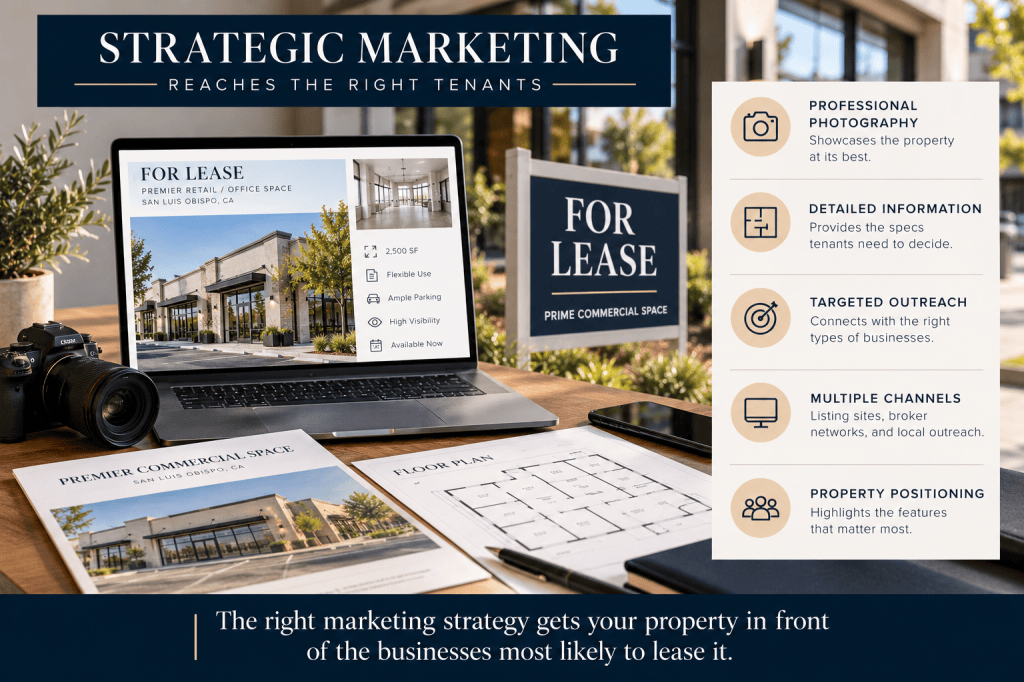
Putting a commercial property online is important.
But simply posting a listing and waiting for inquiries isn’t always enough.
A successful leasing campaign should answer two questions:
Who is the ideal tenant for this space?
And:
How do we get the property in front of that tenant?
Different Properties Need Different Marketing Strategies
A small neighborhood retail suite may benefit from local business outreach and strong online visibility.
A larger office property may require outreach to professional services companies, medical practices, and businesses considering expansion or relocation.
An industrial property may appeal to contractors, distributors, manufacturers, or other operational users, depending on the building’s capabilities and permitted uses.
The marketing should reflect the property’s actual strengths.
Good Marketing Answers Questions
Prospective tenants want useful information.
How large is the space?
What is the total estimated occupancy cost?
What uses are permitted?
What is the parking situation?
What improvements are already in place?
When is the space available?
What makes the location attractive?
Clear information helps businesses determine whether the property deserves a closer look.
Presentation Matters
Professional photography, floor plans, video walkthroughs, location maps, and clear property descriptions can all help prospective tenants evaluate a space.
But those materials are most effective when combined with targeted outreach.
A property doesn’t need to reach everyone. It needs to reach the businesses most likely to lease it.
7. The Owner Isn’t Adjusting When the Market Responds

Here’s something property owners should pay attention to:
The market gives feedback.
Sometimes that feedback comes through inquiries.
Sometimes it comes through property tours.
Sometimes it comes through offers.
And sometimes it comes through a lack of activity.
Imagine a property has been marketed for 90 days.
The listing has received attention, but very few qualified prospects have scheduled tours.
That could suggest an issue with the marketing, pricing, or the property’s fit for current demand.
Now imagine the property is receiving frequent tours, but no one submits an offer.
That’s a different situation.
The marketing may be generating interest, but something about the property or lease terms may be preventing prospects from moving forward.
Questions Owners Should Ask
Are prospective tenants seeing the listing?
Are we reaching the right types of businesses?
How many qualified inquiries have we received?
How many tours have taken place?
What objections are we hearing repeatedly?
Are competing properties offering something ours isn’t?
Has market demand changed?
The answers can help guide the next step.
Sometimes the solution is better marketing.
Sometimes it’s an improvement to the property.
Sometimes it’s more flexible lease terms.
And sometimes it’s a pricing adjustment.
The worst strategy is to keep doing exactly the same thing for months without evaluating the results.
The Real Cost of Vacancy
Vacancy affects more than monthly rental income.
Depending on the property, an owner may continue paying expenses such as:
- Property taxes
- Insurance
- Utilities
- Maintenance
- Landscaping
- Security
- Association fees
- Debt service
- Marketing and leasing expenses
Some of these costs exist whether the space is occupied or not.
And certain expenses may increase during vacancy.
Consider a Simple Example
A 2,500-square-foot commercial space has a potential monthly base rent of $5,000.
If it remains vacant for four months, that’s:
$20,000 in potential base rent not collected.
That figure doesn’t include additional carrying costs, leasing expenses, or concessions.
Now imagine an owner could have secured a qualified tenant earlier by offering a modest improvement allowance or adjusting the asking rent.
Would that have produced a better financial outcome?
Possibly.
But the answer depends on the entire transaction.
That’s why owners should evaluate vacancy costs alongside the economics of prospective lease offers.
What I Would Evaluate First on a Vacant Commercial Property
When looking at a property that’s struggling to lease, I would start by reviewing five things.
First: Pricing
How does the asking rent compare with genuinely comparable properties?
Are the lease structures similar?
Are we comparing base rent or total occupancy costs?
Second: Physical Condition
Does the property show well?
Are there visible maintenance concerns?
Would relatively minor improvements make a meaningful difference?
Third: Functionality
Does the space work for the types of tenants we’re targeting?
Are parking, access, layout, and permitted uses aligned with likely demand?
Fourth: Marketing
Are the photographs and listing information accurate and compelling?
Are we reaching qualified tenants directly?
Are brokers and local businesses aware of the opportunity?
Fifth: Feedback
What are prospective tenants telling us?
What objections keep coming up?
Have we adjusted the strategy based on that feedback?
These questions won’t guarantee a lease.
But they can help owners make more informed decisions about what to change and where to invest their time and money.
Final Thoughts: Vacancy Is a Problem Worth Diagnosing
A vacant commercial property isn’t automatically a bad property.
And a space that takes longer to lease isn’t necessarily overpriced.
Sometimes the market is simply slower.
Sometimes a specialized space needs a specialized tenant.
Sometimes businesses are cautious about expanding.
But sometimes the problem is something the owner can address.
The asking rent.
The presentation.
The layout.
The marketing.
The lease terms.
The willingness to adapt.
The key is understanding why a property isn’t leasing before deciding what to do about it.
Because every month a property sits vacant represents another month of potential income that isn’t being collected.
And while patience can be important in commercial real estate, so is having a strategy.
The goal isn’t just to fill a vacancy. It’s to attract the right tenant on terms that make sense for the property and its long-term performance.
Have a Commercial Property That’s Been Sitting Vacant?
If you own commercial property in San Luis Obispo County and are struggling to attract tenants, it may be time to take a closer look at the property’s leasing strategy.
At Trujillo Commercial Real Estate Group, we work with commercial property owners and businesses throughout the Central Coast.
Whether you’re evaluating rental rates, preparing a space for the market, or developing a leasing strategy, understanding the property’s strengths and challenges is an important first step.
Contact Rod Trujillo to discuss your commercial property.
Rod Trujillo
Trujillo Commercial Real Estate Group
805-439-4733
rod@trujillo-group.com
www.trujillo-group.com
This article provides general commercial real estate information. Financial examples are hypothetical and do not represent actual property performance. Leasing results depend on market conditions, property characteristics, tenant qualifications, and negotiated terms.